
You have started noticing the sound. Every few minutes, a hum and a gurgle from the corner of the basement, and now you cannot stop counting. Is that normal? Is it about to burn out? Is something wrong with the house?
There is no universal answer, and any article that gives you one number is guessing. A sump pump is not on a schedule. It is a float switch responding to water arriving in a pit, so the honest question is not “how often should it run” but “does the pattern match the conditions?”
A pump cycling every two minutes during a spring downpour is behaving perfectly. The same pump cycling every two minutes during a dry August week is telling you something is wrong.
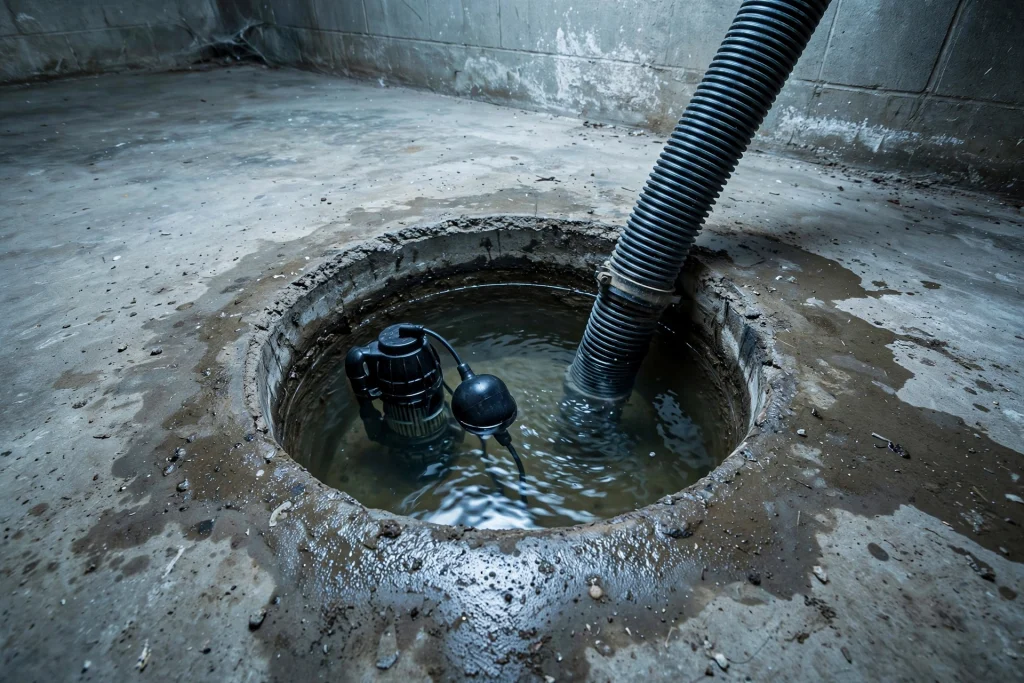
What normal looks like
Use conditions as your baseline, not the clock.
During heavy rain: every 1 to 5 minutes is entirely normal. Water reaches the drain tile around your footing fast during a storm, and the pump is doing exactly what it exists to do.
For 24 to 48 hours after heavy rain: every 5 to 20 minutes, tapering off. Soil drains slowly, so the pump keeps working long after the sky clears. This is the phase homeowners most often mistake for a malfunction.
During a prolonged wet spell: every 15 to 30 minutes, potentially for days. Saturated soil stays saturated.
During spring thaw: frequent cycling for weeks. Frozen ground cannot absorb meltwater, and the water table typically peaks in spring. This is the busiest season for most pumps.
During a normal dry week: anywhere from a few times a day to not at all, depending entirely on your water table.
During a dry summer: not running for days or weeks is completely normal in many homes. It does not mean the pump is broken, though it does mean you should be testing it periodically rather than assuming it works.
The single most useful thing you can do is establish your own baseline. Note roughly how often your pump runs in dry weather, in ordinary rain, and in a downpour. Once you know your house’s normal, deviations become obvious.
What determines your normal
Four factors set the frequency, and none of them are about the pump itself.
Your water table. How high the groundwater sits relative to your basement floor. Homes on low ground, near wetlands, or at the bottom of a slope have high water tables and busy pumps year-round.
Your soil. Clay holds water and releases it slowly, producing prolonged moderate cycling. Sandy soil drains quickly, producing short bursts and then nothing. Learn what you are sitting on, because it explains a great deal about why water pressure builds against your foundation.
Your surface drainage. This is the factor you control. Downspouts discharging at the wall and soil sloping toward the house both deliver hundreds of extra gallons directly to the backfill zone. Many “overactive” pumps are simply being fed by gutters that dump straight into the foundation.
Your pit size and draw-down. A small pit with a short float travel cycles frequently by design. A larger pit with a tethered float running a longer draw-down cycles less often but for longer each time. Neither is wrong, they are different arrangements.
Reading your pump’s pattern
Frequent short cycles during dry weather
The single most common complaint. Possible causes, roughly in order of likelihood:
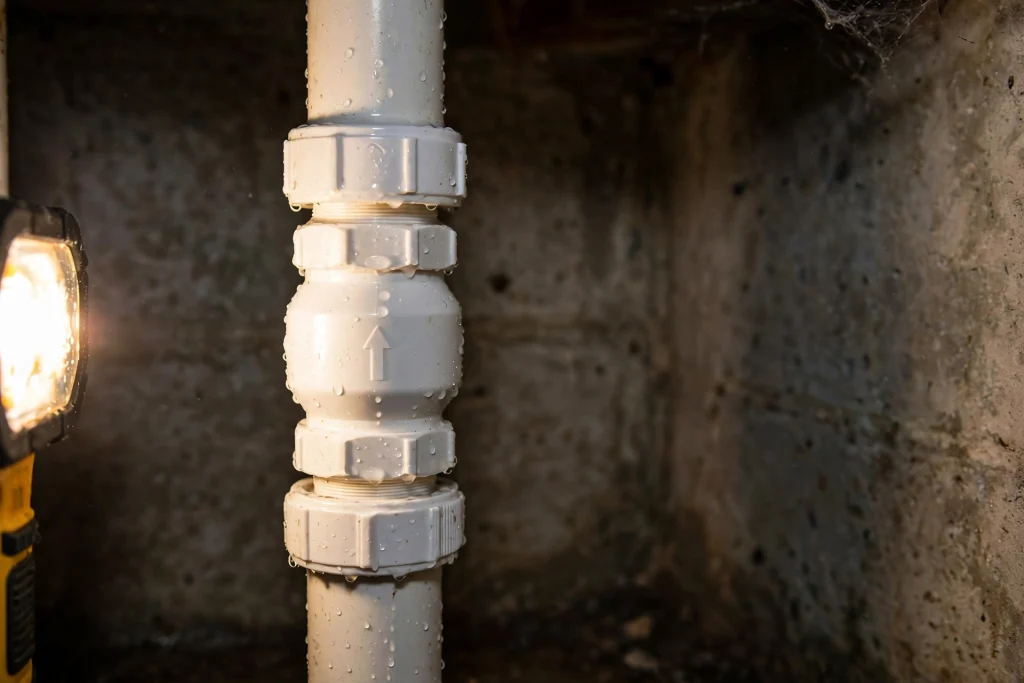
A failed check valve. The check valve in the discharge pipe stops the column of water above the pump from falling back into the pit when the pump shuts off. When it fails, that water returns, raises the pit level, and triggers the pump again. The result is a loop that can run all night moving the same few gallons up and down. This is the first thing to check, and a replacement valve costs $15 to $40.
Discharge water returning to the pit. If the discharge line terminates too close to the house, the water soaks into the backfill, reaches the drain tile, and comes right back. The pump is running a recirculating loop. Discharge should exit at least 10 feet from the foundation, further on flat lots.
The float is set too low, or the draw-down is too short. Some vertical float switches have adjustable travel. Increasing the range means fewer, longer cycles and less wear on the motor.
An oversized pump. A pump that empties the pit in four seconds cycles far more often than necessary. Bigger is not better with sump pumps; short-cycling is what kills motors.
We cover the full diagnostic sequence in sump pump keeps running but no water, which is the specific version of this problem where the level never seems to drop.
Running constantly with no rain for days
A genuinely high water table is the benign explanation, and it is common in some locations. If it correlates with seasonal groundwater levels rather than rainfall, the pump is doing its job.
A broken underground water line is the expensive explanation. A leaking supply line or irrigation feed can deliver water continuously to the soil around your foundation. Check for an unexplained increase on your water bill.
A neighbour’s discharge routed toward your lot, or a downhill drainage change from new construction nearby.
A leaking sump discharge line that has cracked underground and is releasing its own water back into the soil beside the house.
Never running, even during heavy rain
More concerning than frequent running, because it may mean the pump is not working and you will discover it during the storm that matters.
Check whether it is plugged in, whether the breaker or GFCI has tripped, whether the float is jammed against the pit wall or the discharge pipe, and whether the motor responds when you pour water in.
If the pump is fine and the pit genuinely stays dry through a storm, that raises a different question, which is whether the drain tile is delivering water to the pit at all. A clogged or collapsed drain line means groundwater is going somewhere else, possibly through your walls. That scenario is covered in why is my sump pit dry.
Sudden change in a long-established pattern
Any noticeable change deserves attention, because it means something in the system or the site has changed. A pump that ran twice a day for six years and now runs every ten minutes has a new water source or a new mechanical fault.
When frequent running actually damages the pump
The concern is real but it is often misplaced. Motors are not damaged by running; they are damaged by starting.
Every start draws a surge of current several times the running current, and it generates heat in the windings. A pump that runs for 30 seconds twenty times an hour experiences far more electrical and thermal stress than one that runs for ten minutes twice an hour, even though total runtime is similar.
Submersible pumps also rely on the surrounding water for cooling. Short cycles that empty the pit completely can leave the motor briefly exposed and running hot.
Practical implications:
- Short-cycling is worth fixing, and the fix is usually a check valve or a float adjustment
- Long continuous running during a storm is generally fine and within design intent
- A pump that runs continuously for many hours in dry weather is either undersized or recirculating, and both shorten its life
Heavy cycling does reduce service life. A pump in a demanding installation may reach the end of its useful life in four or five years rather than the usual span discussed in how long do sump pumps last.
How to actually measure your cycles
Guessing from memory is unreliable. Three approaches, in increasing order of usefulness:
Time it manually. Sit with a phone for twenty minutes and record the start and stop of each cycle. Note the weather and the date. Repeat in different conditions to build a picture.
Use a cycle counter. Inexpensive inline devices log run count and total runtime, which turns a vague impression into data.
Install a Wi-Fi sump monitor. Units in the $80 to $200 range track water level and pump activity, send a phone alert on high water or pump failure, and log history so you can see trends. If you travel or own a second property, this is one of the better small investments available.
Whatever method you use, write down the weather alongside the frequency. Cycles without context tell you nothing.
Reducing how often your pump has to run
If your pump is working harder than you would like, the most effective interventions are outside the house, not in the pit.
Extend the downspouts. Six to ten feet from the foundation, minimum. A single downspout discharging at the wall can deliver hundreds of gallons into the backfill zone during one storm, and much of that arrives at your pit.
Clean the gutters. Overflowing gutters create a curtain of water landing in a narrow strip against the foundation.
Correct the grading. Soil should fall at least six inches over the first ten feet from the house. Proper grading slope is one of the highest-value fixes available and it is frequently the reason a pump runs more than it needs to.
Move the discharge further out. If your discharge terminates near the house, extending it stops the recirculation loop entirely.
Cover the window wells so they stop funnelling rain into the soil beside the wall.
None of this is glamorous work, and all of it reduces the volume of water your pump has to move. Doing it also reduces the pressure that pushes water through your foundation walls in the first place.
Frequently asked questions
Is it bad if my sump pump runs every 5 minutes? During or shortly after heavy rain, no, that is normal. In dry weather, yes, and the usual causes are a failed check valve or a discharge line that returns water to the soil beside the house.
Should my sump pump run in winter? Less than in spring, usually, since frozen ground reduces infiltration. Some running is normal during thaws and mild spells. What you must confirm is that the discharge line is not frozen, because a pump running against a blocked line will overheat.
My pump runs all night but not during the day. Why? Check whether an irrigation system runs overnight, or whether a neighbour’s system does. It is a surprisingly common explanation.
Is a pump that never runs broken? Not necessarily. It may simply mean a low water table. Confirm by pouring water into the pit and watching it activate. If it does not, work through the checks in how to test a sump pump.
Does frequent running mean I need a bigger pump? Usually the opposite. Oversized pumps short-cycle more, which is harder on them. Frequent cycling is more often a check valve, discharge, or float issue than a capacity issue.
How long should each cycle last? Typically 10 to 30 seconds, depending on pit size and draw-down. Cycles under 5 seconds suggest short-cycling. Cycles running several minutes continuously suggest the pump is struggling to keep ahead of inflow.
Will running constantly during a storm burn out my pump? Quality pumps tolerate extended running, and continuous operation during a major storm is within design intent. What you should have in place is a battery backup, because the same storm that maximises demand is the one most likely to cut power.
My pump is running more than it did last year. Should I worry? Investigate the change rather than the number. Something is different: a disconnected downspout, settled grading, a new impermeable surface nearby, a failing check valve, or a rising water table. A changing pattern is more informative than an absolute frequency.
The bottom line
Stop counting cycles in isolation and start comparing them to conditions. Every few minutes during a downpour is a pump doing its job. Every few minutes during a dry week is a check valve, a short discharge line, or a stuck float.
Build a baseline for your own house across a few different weather conditions, write it down, and then watch for change rather than for a number. And if the frequency bothers you, go outside first. Extending a downspout costs $30 and takes ten minutes, and it removes more water from your pit than anything you can do inside the basement.
[…] who extend downspouts commonly see seepage stop entirely, sump pump cycling drop noticeably, efflorescence stop returning, and basement humidity […]
[…] There is no universal correct answer, because it depends entirely on how much water reaches your pit. What matters is whether the pattern matches conditions. […]