
You went downstairs and the floor is wet. Maybe it is a damp patch near the wall, maybe it is two inches across the whole room. Either way, the clock has started, and the order in which you do things over the next 24 hours determines whether this becomes a weekend of cleanup or a $15,000 mold remediation project.
This guide is the action list. It covers safety first, then stopping the water, then removal, then drying, then documentation. Understanding why it happened matters too, but that comes after the water is gone.
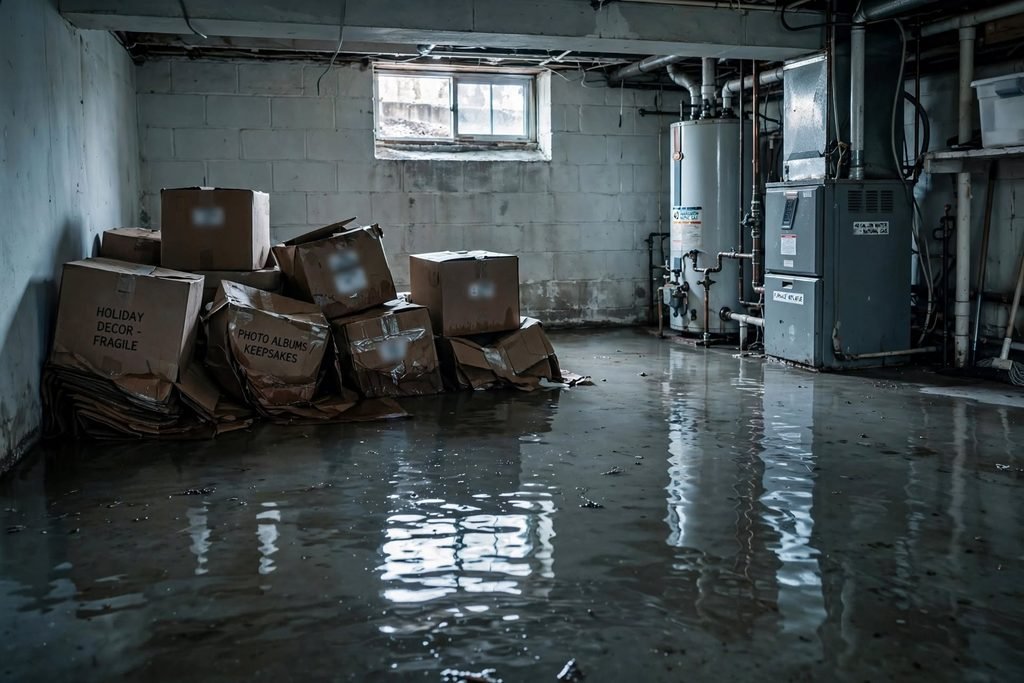
The first 30 minutes: safety before property
Nothing in your basement is worth an electrocution. Work through this list before you step into water.
1. Do not enter standing water until the power is off
Water plus outlets plus extension cords plus submerged appliances is a lethal combination, and you cannot tell by looking whether a circuit is live. Shut off the electricity to the basement at the main panel.
If the panel itself is in the flooded area, or the water is deep enough to reach outlets, do not go down there. Call your utility company and have them cut power at the meter. This is a free service and they respond to it as an emergency.
2. Check for gas
If you smell gas, or if water has risen high enough to reach the burners on a furnace or water heater, shut off the gas at the meter and leave the house before calling the gas company. Do not flip any switches on your way out.
3. Identify what kind of water this is
Restoration professionals sort water into three categories, and it changes everything about how you handle it.
Category 1, clean water. From a supply line, a water heater tank, or rainwater that came straight in through a window well. Lowest risk, but it degrades to Category 2 within about 48 hours of sitting.
Category 2, gray water. Groundwater seepage through walls or the floor, washing machine discharge, or dishwasher overflow. Contains soil bacteria and contaminants. Requires gloves and boots.
Category 3, black water. Anything from a sewer, a floor drain backing up, or floodwater from outside that flowed over ground. Carries sewage bacteria, chemicals, and pathogens. This is a professional cleanup job, not a mop-and-bucket job, and porous materials that contacted it are discarded rather than cleaned.
If water is coming up through a floor drain or toilet, treat it as Category 3 regardless of how clear it looks.
4. Protect yourself
Rubber boots, waterproof gloves, and eye protection at minimum. An N95 mask if there is any odor or if the water has been sitting more than a day. Do not wade in bare feet or sneakers.
Stop the water coming in
Removing water while more is arriving is wasted effort. Find the source.
If the sump pump is silent, check the breaker and the GFCI outlet first, then confirm it is actually plugged in. Look into the pit and see whether the float is jammed against the wall or the discharge pipe. A stuck float is the most common single-point failure and can sometimes be freed by hand once the power is off.
If the sump pump is running but the water is not dropping, the discharge line is likely blocked, frozen, or disconnected. Go outside and confirm water is actually exiting where it should. A pump running against a blocked line will overheat and burn out, so unplug it if you cannot clear the blockage.
If a downspout is dumping against the foundation, this is fixable right now with anything you have. Extend it with a length of flexible pipe, or even divert it temporarily with a tarp or a scrap of gutter. Getting hundreds of gallons away from the wall during an ongoing storm makes an immediate difference.
If a window well is overflowing, bail it out and cover it. A trash can lid weighted down works in a pinch.
If water is entering through a specific crack under pressure, hydraulic cement can plug an active leak temporarily. It sets in minutes and expands as it cures, so it works even against flowing water. This is a stopgap, not a repair, but during a storm a stopgap is what you need.
If it is a burst pipe rather than groundwater, shut off the main water valve to the house immediately. This is the one situation where you can genuinely stop the water in seconds.
Get the water out
The target is standing water gone within a few hours, because materials that stay wet past 24 to 48 hours start growing mold.
For an inch or less
A wet/dry shop vac handles this. Empty it frequently rather than trying to fill it, since a full 16-gallon vac weighs about 130 pounds. Squeegees and a floor drain, if you have one that is not the source of the problem, move water faster than a vac alone.
For deeper water
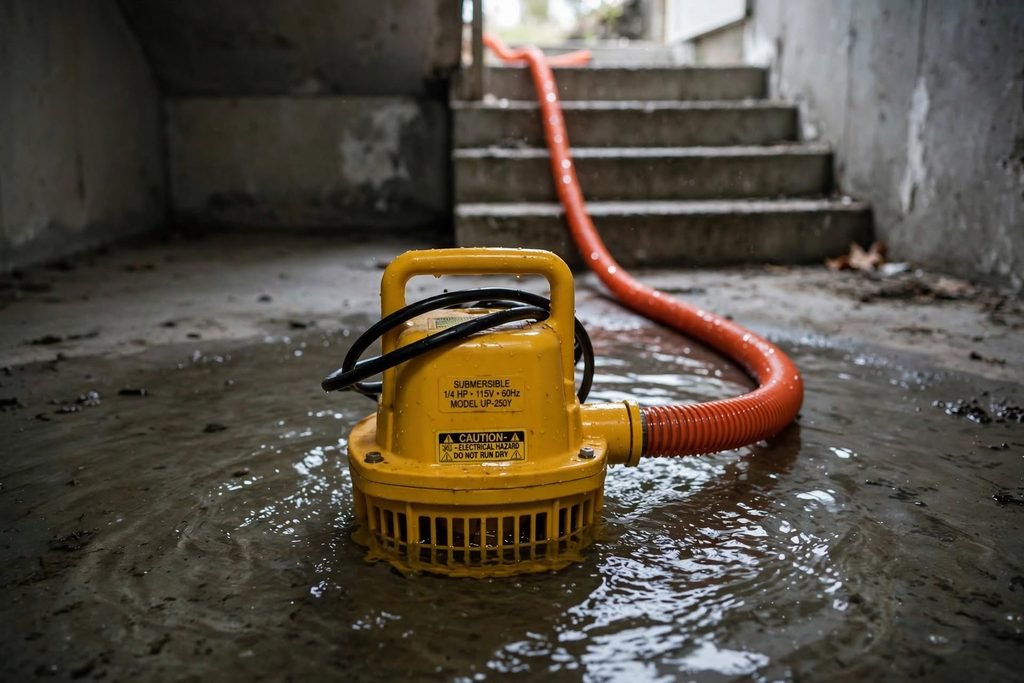
A submersible utility pump, rentable for $30 to $60 a day at any hardware store, will move a few thousand gallons per hour. Run the discharge hose well away from the house, at least 20 feet and downhill, or you will simply pump the water back into the soil it came from and see it again in an hour.
For water above a few inches
This is where you seriously consider calling a water damage restoration company. They arrive with truck-mounted extraction, commercial dehumidifiers, and air movers, and they know how to document for insurance. Emergency response typically runs $1,000 to $4,000 for a residential basement, more for large volumes or contaminated water.
Document everything before you clean
This step gets skipped constantly and it costs people real money.
Photograph and video before touching anything. Wide shots showing the extent of the water, close-ups of the highest water line on walls and on stored items, close-ups of damaged belongings, and shots showing what caused it if it is visible.
Get the water depth on record. Hold a tape measure against the wall in a photo. Mark the high-water line with a pencil and photograph it with the date visible.
Make an inventory list of damaged items with approximate purchase dates and values. Keep the damaged items, or at least photograph them thoroughly, until an adjuster has seen them.
Save receipts for pump rentals, dehumidifiers, fans, cleaning supplies, and any emergency contractor. Many policies reimburse reasonable mitigation expenses even when they exclude the underlying damage.
Call your insurer within 24 hours even if you are unsure of coverage, because most policies require prompt notice and a delayed claim can be denied on that basis alone.
What insurance actually covers
Standard homeowners policies generally exclude groundwater seepage, surface water, and flood. They generally include sudden accidental discharge from plumbing, like a burst supply line.
Two add-ons change this. A water backup and sump overflow endorsement, often $50 to $250 a year, covers sewer backups and sump pump failures up to a limit. Flood insurance through the NFIP or a private carrier covers rising surface water and has a 30-day waiting period, so it cannot be purchased once a storm is in the forecast.
Read your declarations page rather than guessing. Coverage varies far more between policies than most homeowners assume.
Drying: the part that actually prevents mold
Removing standing water is not the same as drying. Concrete, drywall, framing, and insulation hold enormous amounts of moisture that will keep the space damp for weeks without active intervention.
The 48-hour rule. Mold colonization typically begins within 24 to 48 hours on wet organic materials. Drywall, carpet padding, cardboard, wood, and upholstery are all food sources. Concrete itself does not feed mold, but the dust and organic film on it does.
Run dehumidifiers continuously. A standard residential unit removes 30 to 50 pints per day. For a seriously wet basement, rent commercial LGR dehumidifiers, which pull 100 to 150 pints per day and cost $50 to $100 a day. Empty the reservoir or run a drain hose to a floor drain or sump pit.
Move air across surfaces, not just around the room. Air movers or box fans aimed low along walls and floors accelerate evaporation dramatically. Point them at the wet surfaces themselves.
Do not open the windows in humid weather. This is counterintuitive but important. If the outdoor dew point is high, opening windows brings in moisture-laden air that condenses on your cool basement surfaces and makes drying worse. Check the dew point, not the relative humidity. Below about 55°F dew point, ventilating helps. Above that, keep it closed and run the dehumidifier.
Measure rather than guess. A $15 hygrometer tells you when you are actually done. Target is 45 to 50 percent relative humidity, held steady for several days. A $30 pin-type moisture meter checks whether framing and drywall have genuinely dried, which the air reading will not tell you.
Expect it to take days, not hours. A moderately wet basement takes three to five days of aggressive drying. Concrete releasing absorbed moisture can take weeks.
What to keep and what to throw out
Hard decisions made quickly save money. The general rule is that porous materials that absorbed contaminated water do not get saved.
Discard:
- Carpet padding, always. It is a sponge and it is cheap to replace.
- Wet cardboard and paper products.
- Fiberglass or mineral wool insulation that got wet, since it loses R-value and holds water against framing.
- Particleboard and MDF furniture, which swells and delaminates irreversibly.
- Mattresses, upholstered furniture, and stuffed items exposed to Category 2 or 3 water.
- Any food or medication that contacted floodwater.
Salvageable with proper cleaning:
- Solid wood furniture, if dried slowly to prevent cracking.
- Metal, glass, and hard plastic items, washed and disinfected.
- Clothing and washable textiles, hot water wash.
- Carpet itself, sometimes, if it was Category 1 water and it is extracted and dried within 48 hours. Padding still goes.
Requires a cut:
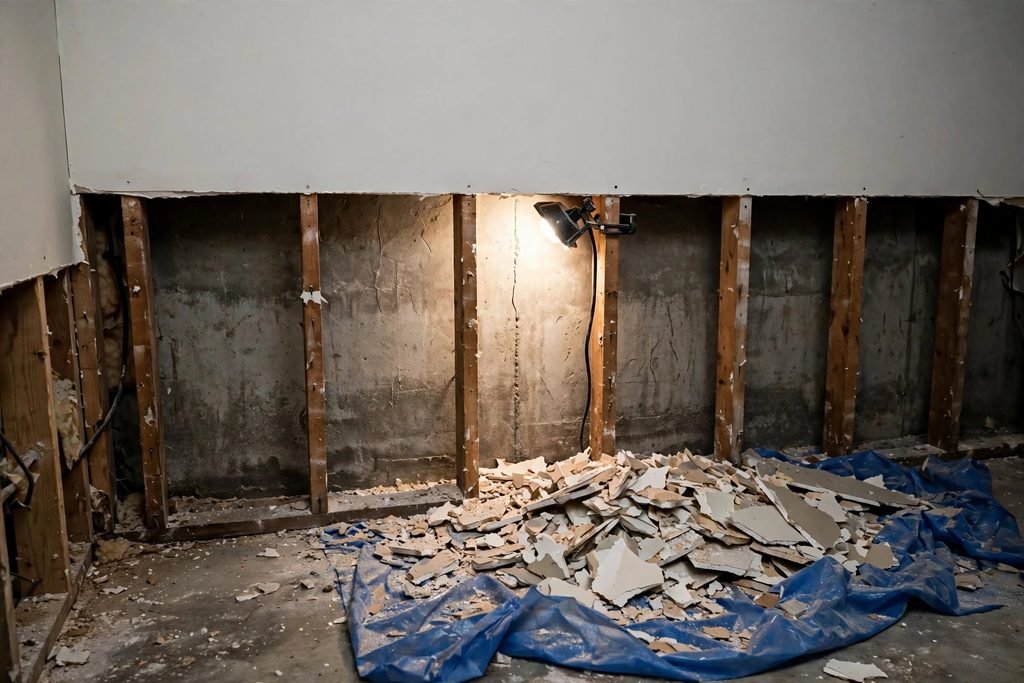
- Wet drywall must be removed to at least 12 inches above the visible water line, and further if a moisture meter reads high. Water wicks upward through gypsum far past where it looks wet. This is called a flood cut, and skipping it is the single most common cause of hidden mold after a basement flood.
Clean and disinfect
Once dry, clean hard surfaces with detergent and water first, then disinfect. Detergent does the actual removal; disinfectant only works on an already-clean surface.
For Category 2 or 3 water, a diluted bleach solution of roughly one cup of bleach per gallon of water works on non-porous surfaces. Never mix bleach with ammonia or with any other cleaner. Ventilate while working.
Do not spray bleach on wet drywall or framing and consider it handled. Bleach does not penetrate porous materials, and applying more water to material you are trying to dry is counterproductive. Porous materials either dry fully or get removed.
When to call a professional
Handle it yourself if the water was clean, under an inch, confined to a small area, and you can get it dry within 24 hours.
Call a restoration company if:
- The water came from a sewer or floor drain backup
- Standing water is more than a few inches deep
- The water sat for more than 24 hours before you found it
- Finished walls, carpet, or insulation are involved
- You are smelling mold already
- Anyone in the household has asthma, immune compromise, or respiratory issues
- You are filing an insurance claim of any size, since professional documentation strengthens it substantially
Ask for a company with IICRC certification, get the scope in writing, and confirm whether they bill your insurer directly.
Then figure out why it happened
Once the emergency is over, the actual work begins, because a basement that flooded once will flood again under the same conditions.
Start with the cheap external fixes: clean the gutters, extend every downspout six to ten feet from the house, check whether the soil slopes away from the foundation, and cover the window wells. These solve a large share of rain-triggered basement water for a few hundred dollars.
Then verify the sump system: test the pump, check the check valve, confirm the discharge runs far enough away, and add a battery backup, because the storm that floods your basement is the same storm that takes the power out.
If those are genuinely handled and water still arrives 24 hours after rain stops, you are dealing with groundwater under pressure, and that is the point where an interior drainage system enters the conversation.
Frequently asked questions
How long do I have before mold starts? Generally 24 to 48 hours on wet organic materials in typical indoor temperatures. Warmer and more humid conditions shorten that window. This is why the drying phase matters more than the water removal phase.
Can I just let it air dry? Not in a basement. Basements are cool, poorly ventilated, and below grade, which means evaporated moisture has nowhere to go and simply condenses on other cool surfaces. Active dehumidification is required.
Should I open windows to help it dry? Only if the outdoor dew point is low, roughly below 55°F. In humid weather, open windows make a basement wetter, not drier.
Is it safe to run a dehumidifier and fans on a wet floor? Use GFCI-protected outlets and keep cords and equipment out of standing water. Extract standing water first, then run equipment on a damp floor.
My basement dried out and smells fine. Do I still need to check for mold? If drywall, insulation, or carpet were wet, yes. Mold grows behind and beneath materials where you cannot see or smell it early on. A moisture meter reading on the framing is a better indicator than your nose.
Does a flooded basement have to be disclosed when I sell? In most states, yes. Material defects including past water intrusion are typically disclosable. Documented, professionally repaired water problems are far less damaging to a sale than undisclosed ones discovered by a buyer’s inspector.
How much does professional water damage restoration cost? Emergency extraction and drying for a residential basement commonly runs $1,000 to $4,000. Adding demolition, mold remediation, and rebuild pushes it to $5,000 to $20,000 or beyond depending on how much finished space was involved.
Will my sump pump handle the next storm? Only if you test it. Pour five gallons into the pit and confirm it activates, empties, and shuts off. Do that quarterly, replace the pump at 7 to 10 years, and install a battery backup.
The bottom line
The order matters more than the effort. Power off, identify the water type, stop the source, document before cleaning, extract, then dry aggressively for several days with dehumidifiers and air movement. Cut out wet drywall and discard carpet padding rather than hoping they dry.
Then spend an afternoon on the outside of the house. Gutters, downspout extensions, and grading are unglamorous and cheap, and they prevent a large share of the storms that would otherwise put you back in the basement with a shop vac.