
The honest answer ranges from three years to fifty, and the spread is not about brands. It is about which method you bought, whether it was installed properly, and whether the water that caused the problem is still arriving at your foundation.
Here is the realistic service life of each approach, what the warranties actually cover, and what shortens them.
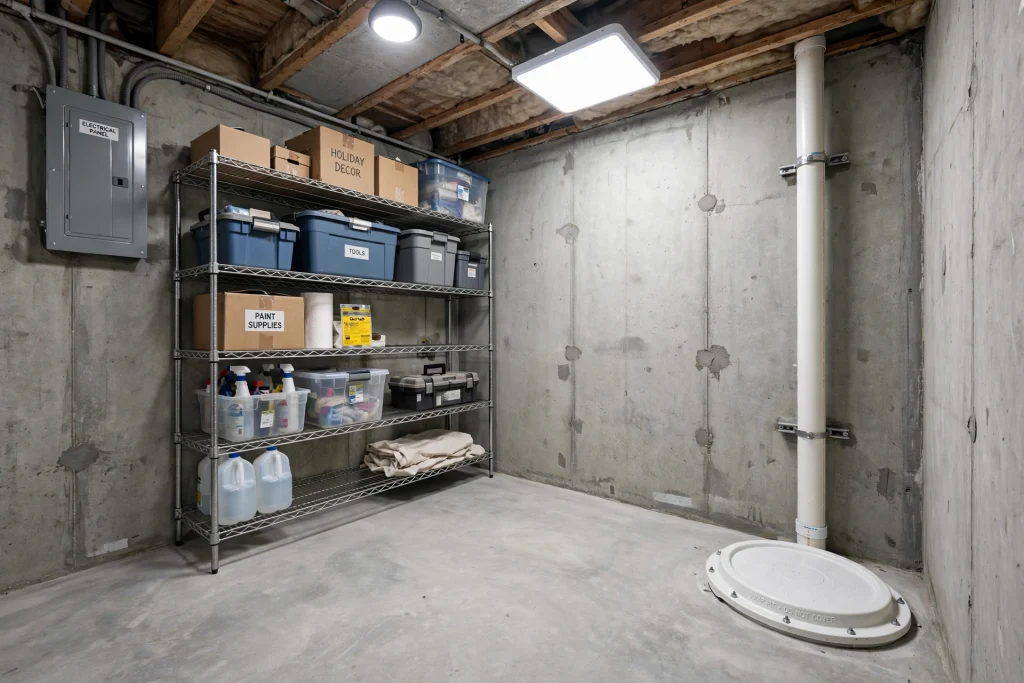
Lifespan by method
| Method | Realistic service life | Typical warranty |
|---|---|---|
| Masonry sealer paint | 3 to 10 years | 10 to 15 yrs, heavily conditional |
| Crystalline coating | 10 to 20 years | Varies |
| Crack injection | Permanent for that crack | Often lifetime, that crack only |
| Hydraulic cement patch | 1 to 3 yrs on a moving crack | None |
| Interior perimeter drain | 30 to 50 years | Often lifetime, transferable |
| Sump pump | 7 to 10 years | 1 to 5 yrs |
| Battery backup battery | 3 to 6 years | 1 to 3 yrs |
| Exterior membrane | 20 to 40 years | 10 to 25 yrs |
| Exterior footing drain | 30 to 50 years | 10 to 25 yrs |
| Carbon fiber wall straps | Permanent | Often lifetime |
| Downspout extensions | 5 to 15 years | None |
| Grading | 10 to 30 yrs before resettling | None |
Two things stand out. Drainage lasts far longer than coatings, and the pump is always the weak link in an interior system.
Why each one ends
Sealer paints
They fail by delamination. Applied to the negative side of the wall, they are held on only by their bond to the outer fraction of an inch of masonry while water pressure pushes them off.
Under genuinely mild vapour dampness they can last a decade. Against any real pressure they can fail in a single season. The full assessment is here.
Crack injection
Polyurethane cures flexible and moves with seasonal wall cycling, so a properly injected crack generally stays sealed permanently. Epoxy is rigid and will crack alongside the repair if the wall moves, which is why resin choice matters more than most homeowners realise. Comparison here.
The warranty typically covers that specific crack, not the wall. A new crack six feet away is a new job.
Interior perimeter drainage
The longest-lived interior approach. Built correctly with filter fabric, clean washed stone, and rigid pipe, the drain itself should function for 30 to 50 years.
It fails from silt accumulation, which is dramatically slowed by proper filter fabric, and from crushing, which rigid PVC resists far better than corrugated. A cleanout allows jetting when flow declines.
Sump pumps
The consumable. 7 to 10 years for a submersible, 10 to 15 for a pedestal, less under heavy cycling. Short-cycling from a failed check valve is the leading preventable cause of early death. Full detail on lifespan and warning signs.
Replace on age, not on failure. A $150 pump on a dry Saturday beats an emergency one during a storm.
Exterior membranes
20 to 40 years, and often longer in practice because they are protected from UV and physical damage once backfilled. They fail from puncture during backfilling, from soil settlement stressing them, and from tree roots.
Exterior footing drains
30 to 50 years with modern rigid pipe, filter fabric, and clean stone. Older clay tile and corrugated pipe fail sooner — silting, root intrusion, joint separation, and crushing. How to tell whether yours still works.
Grading and downspouts
Not permanent. Backfill continues settling, mulch accumulates, extensions get removed for mowing and never replaced. Recheck every couple of years — it takes twenty minutes and it is the cheapest maintenance in the whole system.
What the warranty really covers
Read the exclusions, because that is where the document does its work.
“Lifetime” usually means the lifetime of the structure, not yours, and it typically applies only to the specific work performed. A lifetime warranty on an interior drainage system does not cover a new crack in a wall the system never touched.
Transferability matters at sale. Some transfer once, some transfer with a fee, some do not transfer at all. A transferable warranty is a genuine asset when you sell.
The company has to still exist. A lifetime warranty from a contractor who closes in four years is worth very little. Third-party or manufacturer-backed warranties are more durable than contractor-backed ones. Check how long the firm has been trading.
Common exclusions:
- Water entering above the treated area, or through windows and window wells
- Sewer and municipal backups
- Structural movement, cracks, and settlement
- Pump failure, or damage from power outages
- Acts of God and flooding
- Damage to finished space and contents
- Failure caused by the homeowner altering grading or drainage
- Anything requiring maintenance the homeowner did not perform
Maintenance conditions. Many warranties require documented annual servicing. Skipping it can void coverage entirely, and companies do check.
What is actually promised. Most warranties cover repair of the system, not consequential damage. If your finished basement floods because the pump failed, the warranty typically replaces the pump and nothing else. That is what insurance endorsements are for.
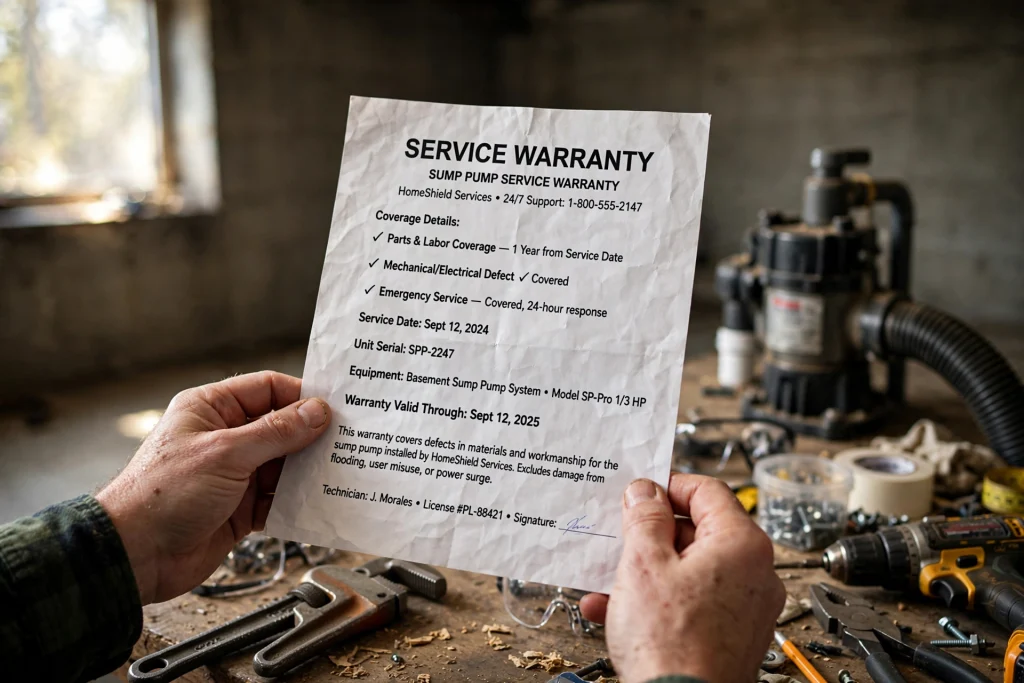
What shortens service life
Unfixed surface water. The most common by a wide margin. A drainage system working against downspouts that still empty at the wall runs at maximum load forever. Extending them costs $30 each.
No filter fabric in the drain. Silt migrates into the gravel and the drain clogs within a decade instead of lasting forty years.
Corrugated instead of rigid pipe. The ridges trap sediment and it cannot be jetted effectively.
Short-cycling pumps from a failed check valve or a discharge line that returns water to the soil.
No cleanout. Makes future maintenance an excavation.
Skipping annual maintenance, which also frequently voids the warranty.
Tree roots growing into drain lines. Species and distance matter.
Freeze-thaw cycling on exposed concrete and on discharge lines that hold water.
Poor installation. More decisive than product choice. A carefully installed budget system outlasts a carelessly installed premium one.
Maintenance that extends it
Quarterly: test the sump pump with a bucket and confirm water exits the discharge outside.
Twice a year: clean the gutters, check downspout extensions are still in place and not crushed.
Annually: clean the sump pit, inspect the check valve, walk the discharge line, load-test the backup battery, and check the footing drain outlet.
Every 2 to 3 years: recheck the grading. Six inches of fall in the first ten feet, and backfill keeps settling.
Every 3 to 5 years: replace the backup battery. Reapply penetrating sealer on exterior concrete.
Every 7 to 10 years: replace the sump pump proactively.
Every 10 to 15 years: consider preventive jetting of the drain line, particularly in silty soil or near trees.
Keep the paperwork. Warranty documents, invoices, and dated photographs. It matters for claims and at sale.
Frequently asked questions
Does basement waterproofing need to be redone? Drainage systems generally do not, if properly built and maintained. Coatings do, every 3 to 10 years. Pumps do, every 7 to 10.
Is a lifetime warranty real? It is real to the extent the company survives and you meet the maintenance conditions. Read the exclusions and check how long the firm has been trading. Manufacturer-backed coverage is more durable than contractor-backed.
How often should I reapply sealer? Masonry sealer paint every 3 to 10 years depending on conditions. Penetrating concrete sealer on exterior flatwork every 3 to 5 years.
Which method lasts longest? Exterior footing drainage and interior perimeter drainage, both 30 to 50 years. Coatings are the shortest-lived by a wide margin.
Will waterproofing fail if I change my landscaping? It can, and it can also void the warranty. Regrading, new patios, and new plantings all change how water reaches the foundation.
Does a warranty transfer when I sell? Depends on the contract. Ask before signing, because a transferable warranty is a real selling point.
What if my system fails and the company is gone? You are on your own, which is the argument for choosing an established firm and for manufacturer-backed rather than contractor-backed coverage.
How do I know if my system is still working? The basement stays dry through a wet spring, the sump cycles appropriately, no new efflorescence appears, and humidity holds at 45 to 50 percent. Declining sump activity alongside increasing wall dampness is the warning sign that a drain has silted up.
The bottom line
Drainage lasts decades. Coatings last a few years. That single distinction explains most of the variation in this question.
An interior or exterior drain built with filter fabric, clean stone, and rigid pipe should still be working in thirty to fifty years. The sump pump inside it will need replacing four or five times over that period, and that is normal rather than a failure.
What actually shortens any of it is water that never needed to arrive. Downspouts, gutters, and grading are the cheapest maintenance you will ever do, and they are what determine whether your five-figure system spends its life working hard or working occasionally.